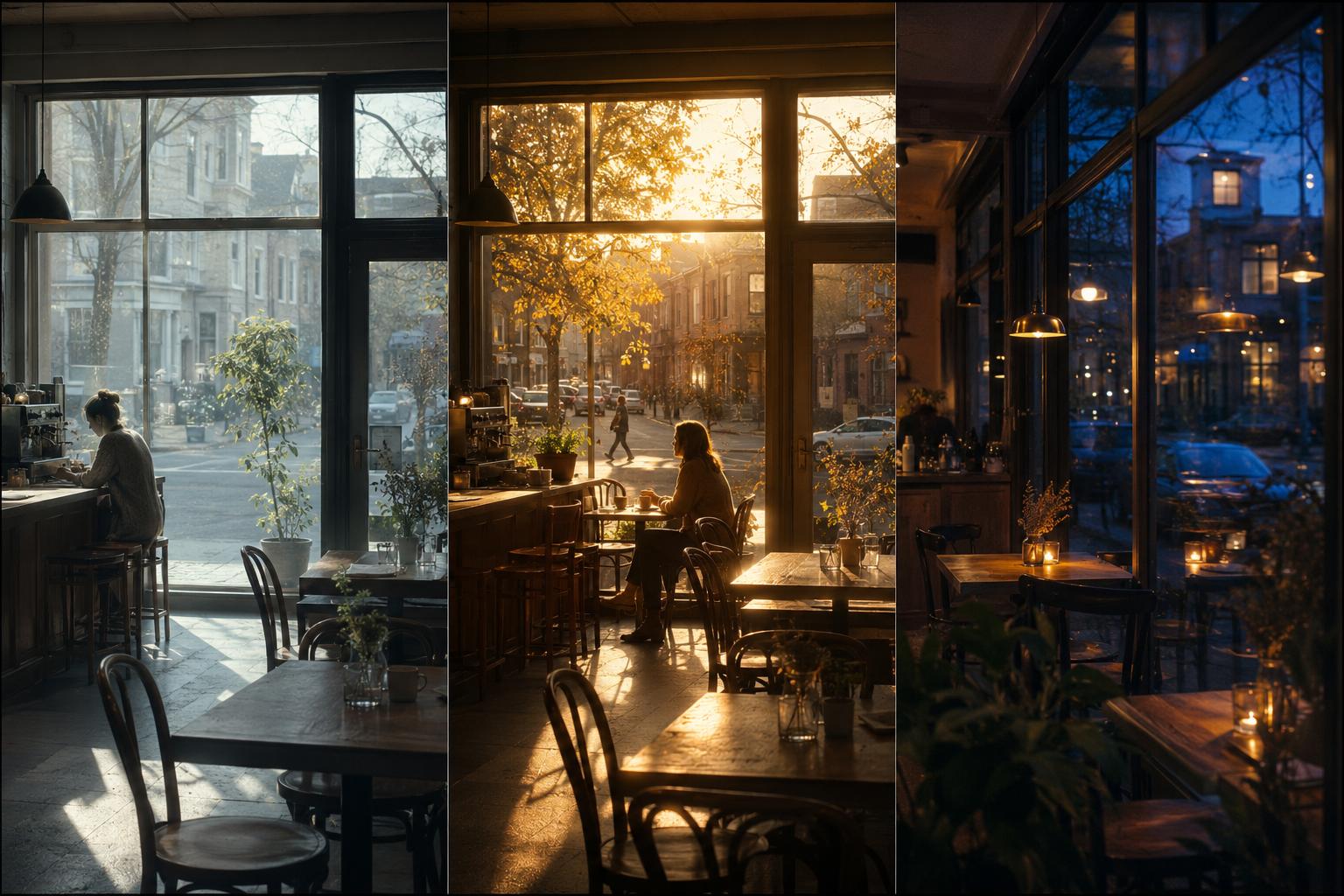
Lina first noticed it in a café she had already visited too many times to count. It stood on a quiet corner she passed almost every day, with tall windows, wooden tables, and a door that opened with the same soft resistance each time. Nothing about it seemed unusual. And yet, one morning when she stepped inside just after sunrise, the place felt almost fragile, as if it had only just awakened. Pale light rested across the floor in long, cool strips. The chairs looked patient. Even the sound of the coffee machine seemed gentler, less certain, like the day was still finding its voice. Lina tried to balance her cup, her phone, and the half-unwrapped croissant in one hand—ending up spilling a little coffee on the sleeve of her sweater, and smiled at herself: this was how mornings always started, a bit messy, a bit alive.
She sat near the window and wrapped both hands around a warm cup. Outside, the street was still thin with movement. A cyclist passed and almost collided with a pigeon that clearly thought it owned the road. Someone across the road lifted a shutter—only to find a cat already napping in the sunlight like it had claimed the place first. It should have been an ordinary moment, but it stirred something in her she could not easily explain. The café felt less like a business and more like a small shelter held quietly between night and day. She thought of how often she entered places assuming they would always be the same. Yet here it was, familiar in form but somehow changed in feeling, as though light itself had entered before her and rearranged the room from within.
She returned again one afternoon, almost without planning to. This time the space had another life entirely. Golden light poured through the windows and spread across the tables with a kind of soft confidence. Voices overlapped gently. Cups touched saucers. Someone laughed at a joke Lina couldn’t hear but imagined might have involved a very enthusiastic pastry. The same wooden chairs that had seemed reserved in the morning now felt companionable, as if they expected people to lean into them and stay a while. Lina sat in nearly the same place as before, but her own mood shifted with the room. She felt more visible to herself there, less hidden. The air seemed fuller, not crowded, just awake with the quiet energy of things already in motion.
She began to wonder if the place was changing, or if she was. Perhaps certain hours revealed parts of a place the way certain moods revealed parts of a person. In the afternoon, the café made her think of possibility—small, unannounced possibility. It was not dramatic. It did not arrive with revelation. It was simply the feeling that something ordinary could still contain more than it first appeared to. That thought stayed with her longer than she expected, and she made a note to herself: never trust a quiet café before noon—it’s deceptively calm.
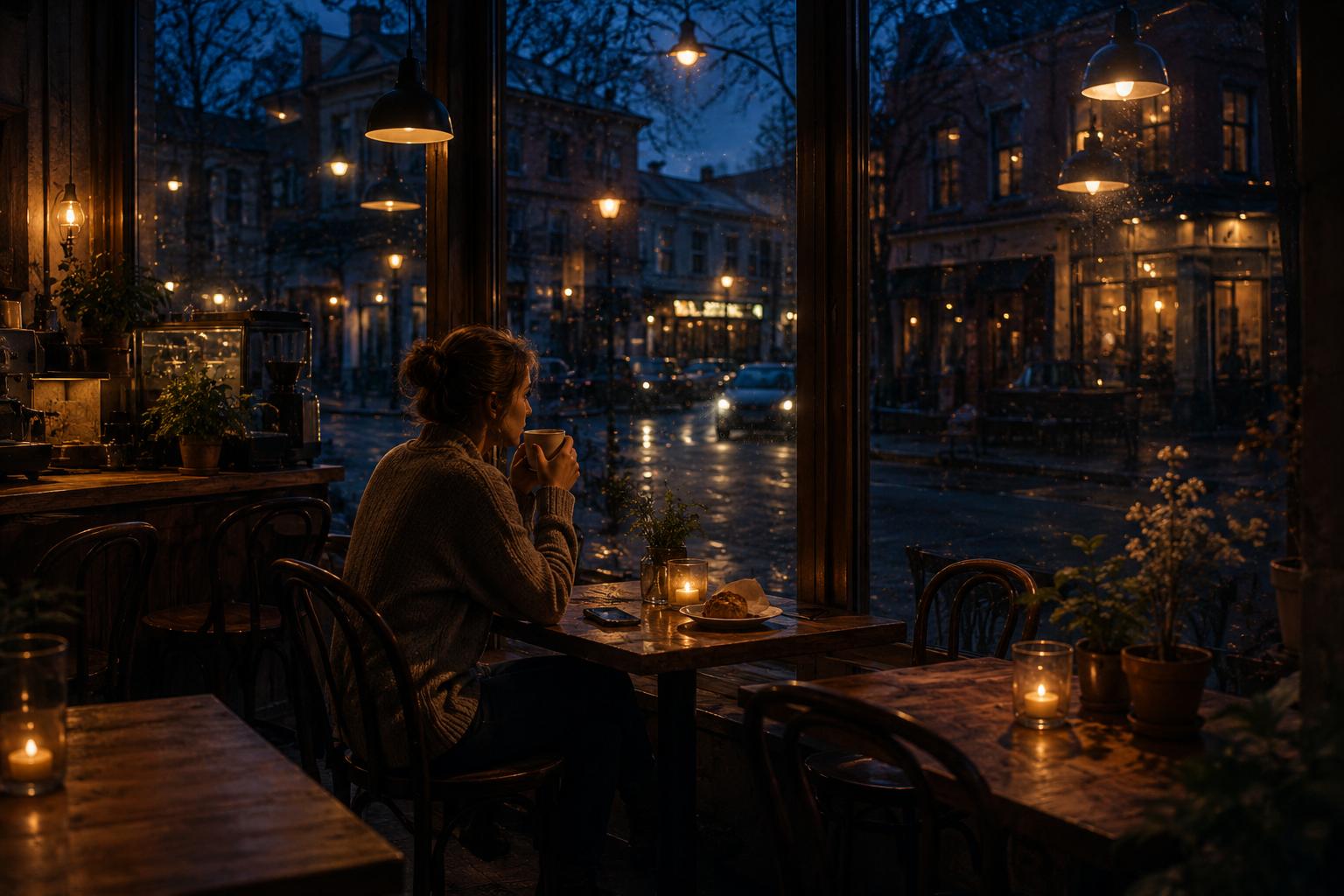
Weeks later, she came again in the evening. By then the windows had become dark mirrors, and the street outside had turned blue with the last of the light. Inside, pendant lamps cast warm circles over the tables. A small candle flickered near the glass. The same room that had felt delicate in the morning and open in the afternoon now felt inward, almost secretive, as if it had quietly folded itself closer. Fewer people were there. The pauses between sounds felt wider. She sat alone and watched the reflections gather in the window—lamplight, silhouettes, her own face faintly layered over the street beyond. Something in that hour touched her most deeply. She felt a strange tenderness toward the room, and perhaps toward herself inside it. So many things in life seemed to ask for certainty, for fixed meanings, for clear conclusions. But this café, in its quiet changes, asked for something else: attention. Not analysis, not explanation—just attention. It reminded her that familiar things do not stay emotionally still. They shift with light, with weather, with memory, with the hour in which we meet them. And sometimes those shifts are small enough to miss unless the heart is calm enough to notice.
When she finally stood to leave, she looked once more at the tables, the window, the dim reflections, the corner she had come to know in different lights. It was still the same place. And yet it had never been just one place.