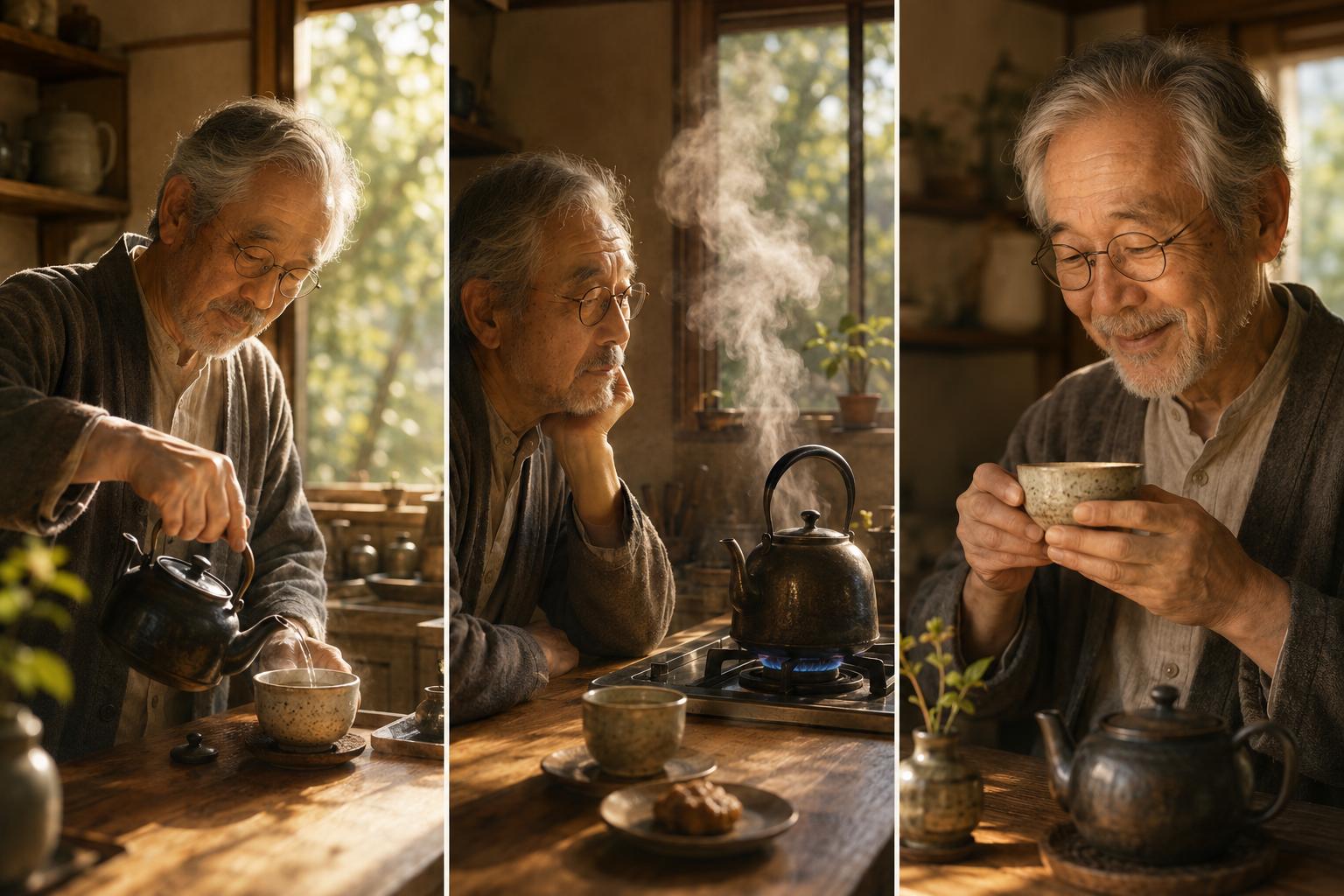
The early morning sunlight filtered through the small kitchen window, catching the edges of the cups and the steam rising gently from the kettle. Mr. Haru moved with his usual deliberate calm, preparing the teacups and measuring the tea leaves. Everything was familiar—every gesture, every sound, every rhythm he had performed countless times. Yet today, the kettle took a few seconds longer to whistle than yesterday, and that tiny delay drew his attention completely.
He paused mid-motion, letting the soft, imperceptible pause sink in. The warmth of the sun on the counter, the faint scent of tea, and the subtle rustle of leaves outside all seemed to amplify the quiet space around him. Even a moment as small as this—barely noticeable to anyone else—felt deeply present. He smiled quietly, appreciating the way the ordinary had briefly shifted.
Minutes passed, each second seeming both ordinary and significant. The delayed whistle of the kettle held him in a delicate balance of anticipation and observation. He noticed the subtle reflection of light on the tea leaves, the curve of the cup handles, the way the shadows stretched across the counter. The small pause had revealed something he might otherwise have overlooked: that stillness could be as meaningful as action, and that attention itself could carry weight in the heart.
Pouring the water into the waiting cups, Mr. Haru felt a gentle sense of satisfaction—not for the tea itself, but for the quiet awareness it had prompted. Even when life’s motions continued around him, the pause had reminded him that noticing, even in subtle rhythms, brought richness and reflection to ordinary moments.