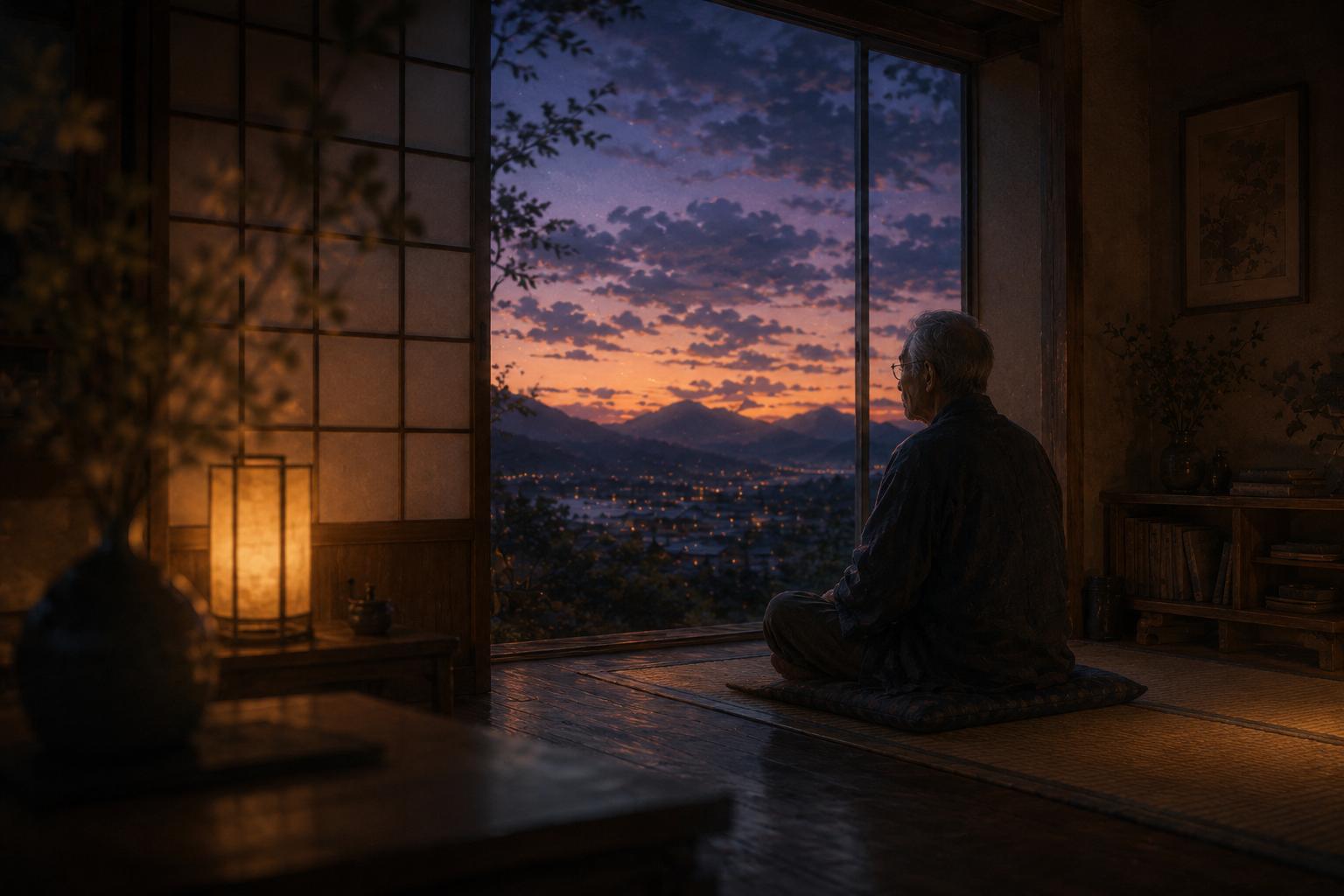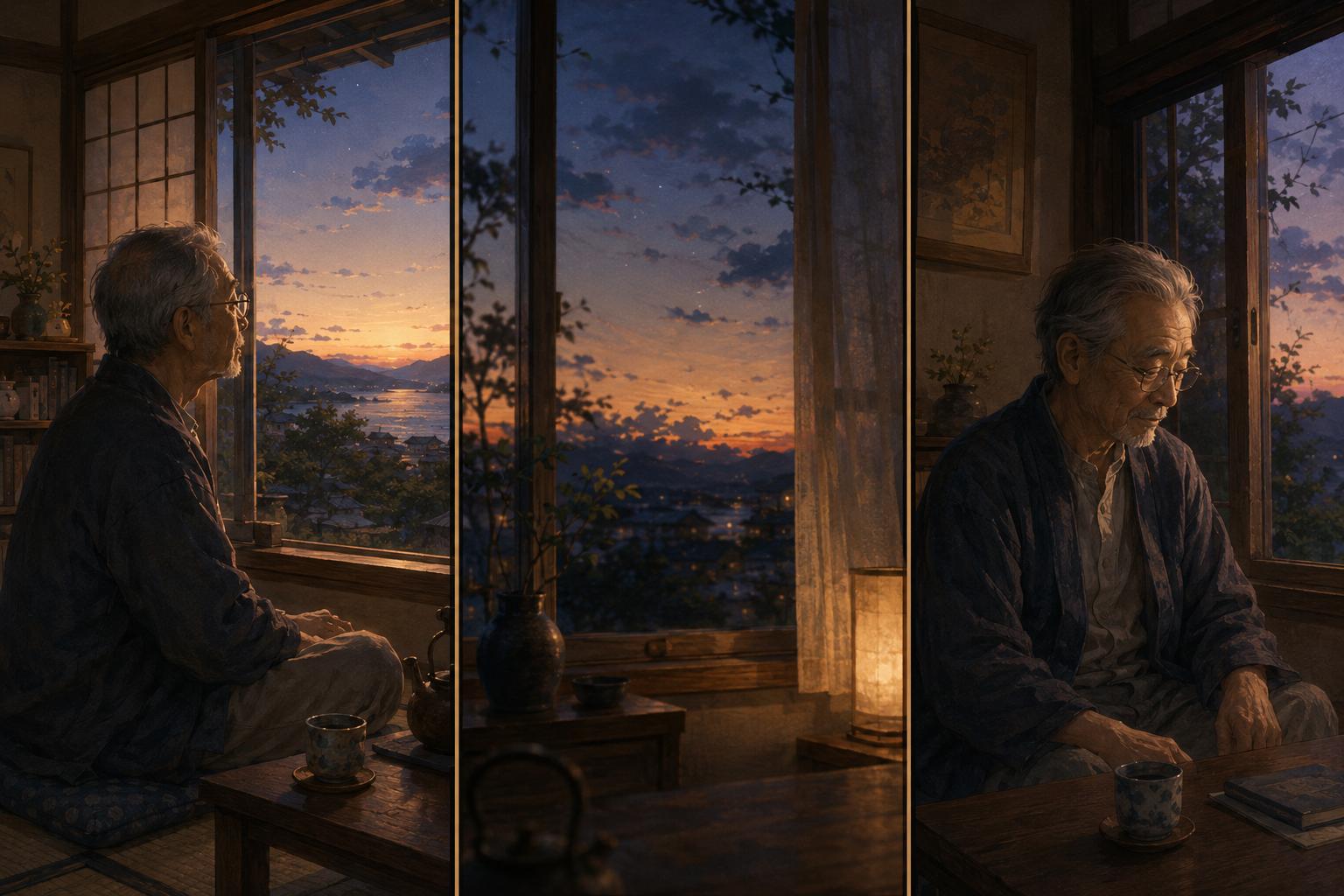
The evening light filtered through the shoji screens, casting soft, muted patterns across the tatami floor. Mr. Haru sat quietly by the window, gazing at the fading sky. A thought had begun to form in his mind, a delicate idea that teased the edges of awareness but refused to settle fully. It hovered there, like a whisper, almost tangible yet elusive, and he let it linger, neither forcing it nor dismissing it.
He shifted slightly on his cushion, feeling the subtle creak of the tatami beneath him. The distant sounds of cicadas and the soft rustle of bamboo outside mingled with the half-formed thought, creating a gentle rhythm. Each element—the light, the shadow, the scent of the wooden room—seemed to amplify the quiet presence of the idea. He noticed how his awareness of the room and the evening stretched along with it, quietly holding him in a reflective pause.
Minutes passed. Mr. Haru’s mind traced the outline of the thought without pushing it into clarity. He felt its weight softly, like a small pebble in his chest, enough to stir reflection and gentle curiosity. Some insights emerged only in these half-formed whispers, subtle and fleeting, offering a kind of meditation on presence and perception. The thought did not need to be complete to matter; its incompleteness made it all the more delicate, all the more poignant.
He inhaled slowly, letting the twilight settle around him, noticing the deepening colors of the sky, the glow of the lantern across the room, the faint reflection of the evening river outside. The half-formed thought and the quiet observation of the space intertwined, each feeding the other, revealing a richness in incompleteness. It was in this stillness, in this patience, that Mr. Haru found the gentle satisfaction of noticing the unseen and the unfinished.
For a while, he sat there, letting the thought remain half-formed, savoring the quiet awareness it brought. Even without full clarity, the moment was complete in its soft resonance, a reflection of subtle rhythms that often go unnoticed.