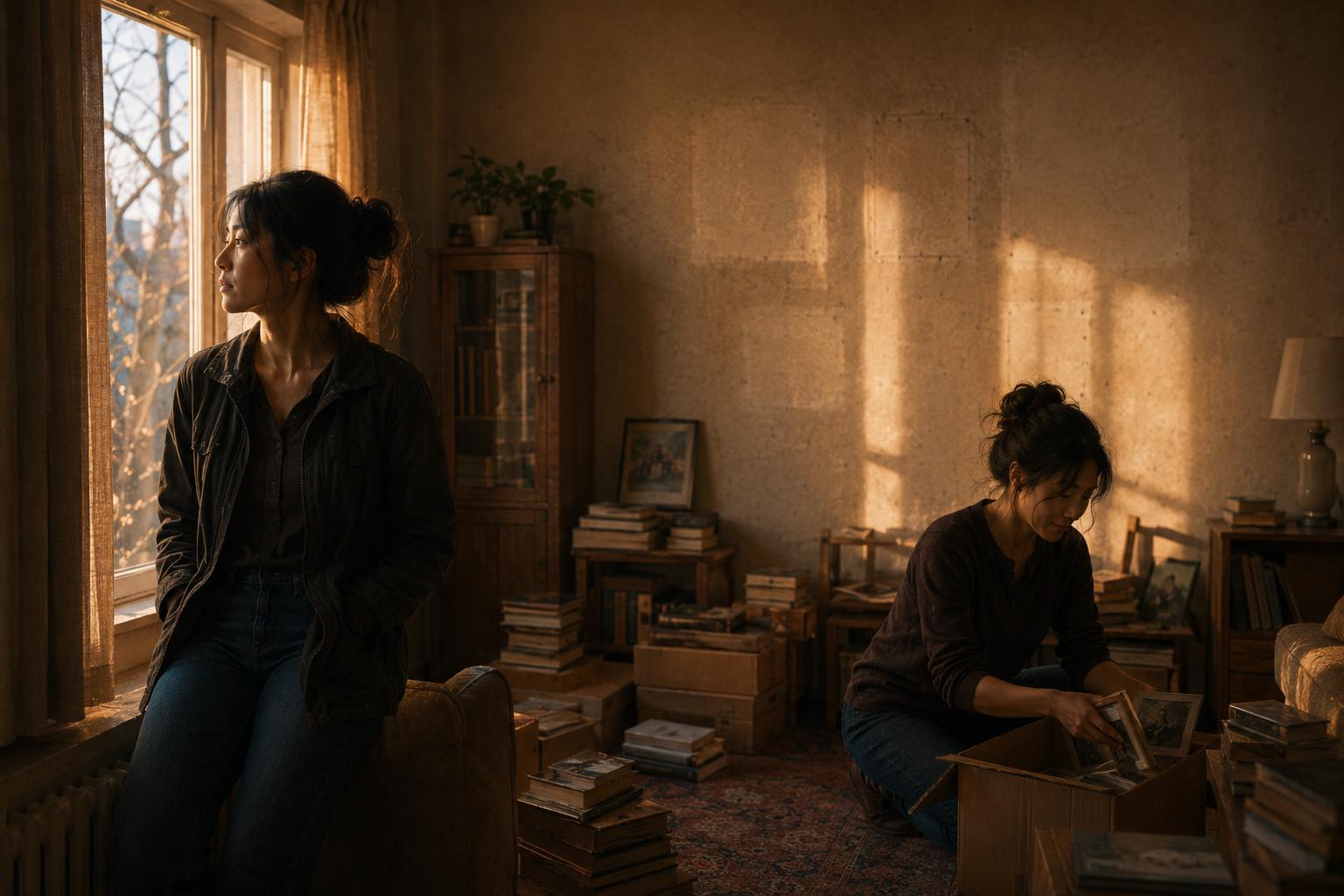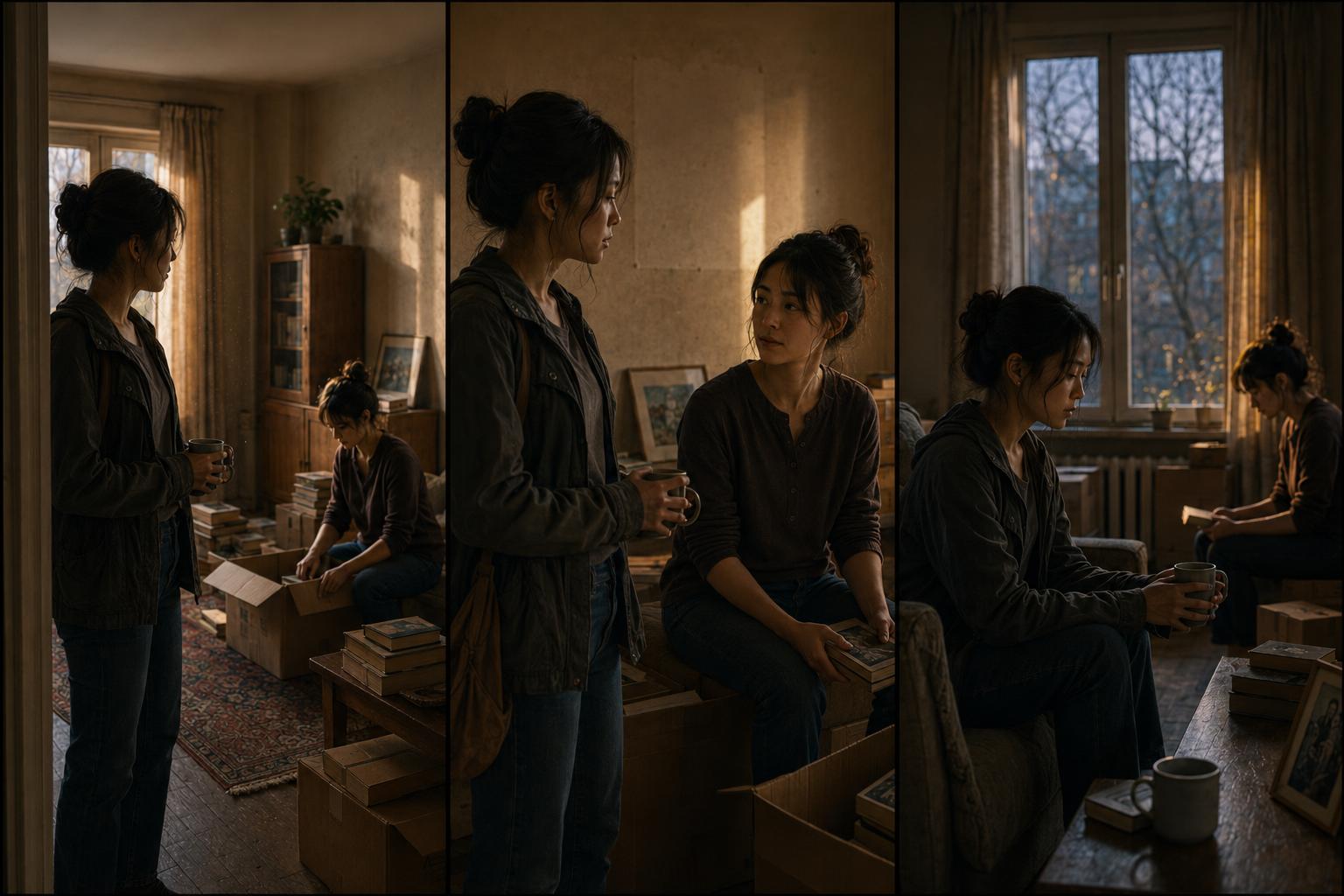
The light changed before either sister mentioned it.
At first, it had entered the sitting room quietly, brightening the floorboards near the window and touching the edges of the boxes. Dust floated above the coffee table, visible only where the light caught it.
Then the sun lowered.
The room began to look different.
Mira noticed the pale rectangles on the wall where framed pictures had once hung. Old nail marks appeared sharper. The faded wallpaper seemed almost unfamiliar, as if the room had been keeping another version of itself beneath the ordinary one.
June knelt near the cabinet, sorting through folders.
“This one?” she asked.
Mira glanced down. “Old bills.”
“Throw?”
“Probably.”
June placed it into the discard box.
The word stayed with Mira. Probably. Everything in the room felt easy to name until they had to decide what it meant.
Keep. Throw. Donate. Repair. Paint over.
June opened another drawer. “Do we need four remote controls for a television that hasn’t worked in years?”
“We might if three of them are emotional support remotes.”
June almost smiled.
Almost.
Then she looked back down. “Donate.”
The small almost-smile faded into the room with the dust.
Mira looked toward the window. The late-afternoon light had crossed the wall behind the sofa. It touched the empty places where family photographs had once been, making the missing pictures feel strangely present.
“Where did the photos go?” Mira asked.
“In the cabinet,” June said. “Top drawer, I think.”
“You took them down?”
“Mum did. Before she decided she couldn’t look at the wallpaper anymore.”
Mira nodded, though she had not noticed they were gone until now.
June opened the drawer and lifted out a frame wrapped in newspaper. She set it on the table.
Mira recognized the photograph immediately.
She and June were children, lying on the sitting room carpet with the same oversized picture book between them. June looked serious, as if responsible for the story. Mira was laughing at something outside the frame.
The carpet looked brighter then.
The room looked larger.
Or maybe they had simply been smaller.
Mira touched the edge of the frame.
“It looks different,” she said.
June sat back slightly. “It was different.”
“The room?”
“Us.”
Mira did not answer.
The light slipped across the glass of the frame. For a moment, the reflection of the window lay over the photograph, placing the child versions of them behind branches, behind evening, behind time.
The room felt unfamiliar again.
Not because anything had changed enough to explain it. The sofa was still the sofa. The cabinet still leaned slightly to one side. The curtains still carried the same faded pattern. But Mira could no longer look at them from the same distance.
The room she remembered, the room June had stayed near, and the room they were clearing now seemed to overlap without fitting perfectly.
June reached for another frame. “This one?”
The glass caught the light, turning the image briefly white.
“Keep it aside,” Mira said.
June looked at her.
“Separate box?”
“Yes.”
June found an empty shoebox and placed the frame inside gently. Then she wrote PHOTOS — KEEP ASIDE across the lid in firm, practical handwriting.
Mira watched her and felt a small tenderness she did not know where to put.
The sun lowered further. The band of light slipped from the wall onto the floor. The pale rectangles where the pictures had hung began to fade back into the general color of the room.
For years, Mira had thought familiarity meant a place could no longer surprise her. But the sitting room seemed to disagree. Under the changing light, it showed her that memory did not stay still. Neither did guilt. Neither did love.
“Evening light is good,” Mira said.
June glanced toward the window.
“I told you.”
“You did.”
“And you doubted me.”
“I was younger then.”
“You doubted me ten minutes ago.”
Mira smiled faintly.
This time, June did too.
It did not solve anything. But in the altered room, it became possible to imagine that not everything unfamiliar had to be frightening.
Some things only needed to be seen again, under different light.